



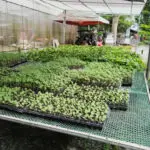
 Angeles City – In a strong push to promote food security and sustainability, the City Government of Angeles, led by Mayor Carmelo “Jon” Lazatin II, continues its support for the Urban Agriculture Program through the free distribution of vegetable seeds, seedlings, fruit-bearing plants, forage seedlings, and ornamental plants to residents.
Spearheaded by the City Agriculture Office, the initiative aligns with the city’s ongoing programs “Gulayan sa Barangay” and “Gulayan sa Paaralan,” which aim to address malnutrition and encourage self-sufficient food production in communities and schools across the city.
Recently, the City Agriculture Office distributed 270 assorted vegetable seedlings and 60 fruit-bearing plants to walk-in clients, barangays, public schools, and farming communities. These efforts are designed to inspire more Angeleños to cultivate their own gardens, even in limited spaces, and contribute to the city’s collective food resilience.
The program particularly focuses on improving the nutrition of schoolchildren by encouraging the establishment of vegetable gardens within school grounds. These gardens serve as both food sources and educational tools, helping students understand the importance of healthy eating and sustainable farming practices.
City Agriculturist Donny Galang emphasized that this initiative is open to all residents. Anyone interested may visit the City Hall Compound, Monday to Friday, to receive free seeds and plants. The distribution is part of the LGU’s larger effort to make agriculture accessible and relevant in an urban setting.
This move not only addresses food security but also promotes environmental sustainability and community empowerment. By supporting urban gardening, the city aims to reduce dependence on external food sources, lower household food costs, and strengthen community ties through shared efforts in gardening and food production.
Through continuous support and proactive programs like these, the Angeles LGU reaffirms its commitment to building a healthier, greener, and more food-secure future for its citizens—one seedling at a time.
Source: Angeles City Information Office
